
There is a version of this article you have already read. Eat carrots in the morning. They cleanse your blood. They flush out toxins. Your cells emerge scrubbed and gleaming, like a kitchen after someone else has done the washing up.
I am not going to write that one, because it isn’t true — and the true version is considerably more interesting.
Your blood is already being cleaned. Right now. Constantly.
Here is what is actually happening inside you while you read this.
Everything you eat or drink enters your bloodstream and passes through your liver. The liver isn’t a filter in the way a coffee machine has a filter — it is closer to a chemical processing plant. It takes compounds that your body can’t safely excrete and rearranges them into ones it can. Then the blood moves to your kidneys, where roughly a million microscopic units called nephrons strain out the waste and send the clean blood back into circulation.[1]
Your lungs, your gut and your skin handle the remainder.
This runs continuously, whether you eat carrots or crisps. And when it genuinely fails, you do not feel a bit sluggish and reach for a juice — you become seriously unwell and need a hospital, quickly.[1]
So the honest position on “detoxing your blood” with breakfast is that there is nothing to detox. The system is not backed up waiting for your help. As one physician put it, your body is not a dirty pipe that needs scrubbing.
Which raises a better question. If vegetables aren’t cleaning anything — and the evidence is fairly firm that they aren’t — why does eating them in the morning genuinely change how you feel?
What they actually do, which is stranger
Your liver’s processing work happens in two phases, and both of them consume raw materials. It needs specific compounds to run those reactions. Without them, the machinery still turns, just less efficiently.
This is where vegetables come in, and where the science is real rather than decorative.
Cruciferous vegetables — broccoli, cabbage, cauliflower, rocket — contain compounds called glucosinolates, which stimulate your body’s production of glutathione. Glutathione is one of the most important antioxidants involved in your liver’s detoxification pathways.[2]
Read that carefully, because the distinction matters. The vegetables do not remove anything. They help your liver make more of the thing that does.
Fibre works differently again. It binds to waste compounds in your gut and carries them out, which reduces how much gets reabsorbed back into circulation.[2] That is a genuine mechanical effect on what re-enters your bloodstream — no mysticism required.
And carrots specifically: the beta-carotene that makes them orange is an antioxidant, working against the oxidative stress your cells generate simply by being alive.
Nobody is scrubbing anything. You are stocking a workshop that was already open.
Why the morning, though?
This part is less about biochemistry and more about how the rest of your day tends to go.
Breakfast is the meal you are most likely to eat consistently and least likely to have decided emotionally. By evening you are tired, your self-control is thinner, and what you eat has more to do with how the day went than with what you intended. Morning is the one slot where intention still has the upper hand.
There is a second reason. Fibre eaten earlier in the day steadies your blood glucose through the hours when you need to think clearly — and glucose dips trigger a cortisol response, which is one of the quiet mechanisms behind feeling inexplicably on edge. We covered that in detail in our piece on why you always feel stressed.
So the morning advantage is real, but it is a behavioural and metabolic advantage rather than a mystical one. The vegetables don’t know what time it is. You do.
The mental health part, honestly stated
Vegetables at breakfast will not lift depression. Anyone selling you that is overreaching, and I would rather lose your trust now than later.
What the evidence does support is narrower. Diet quality genuinely moves depression scores — the SMILES trial demonstrated that in a proper randomised design, and the effect scaled with how much people actually changed. We went through that research in eat well, sleep well. Fibre is also linked to deeper slow-wave sleep, and sleep is upstream of nearly everything else in mood.
The chain runs: better food, steadier glucose, better sleep, more tolerable days. Not: carrot, clean blood, happiness.
It is a less satisfying story. It has the advantage of being true.
What I would actually do tomorrow morning
Nothing elaborate. Nothing that requires a blender or a shopping list you will resent by Thursday.
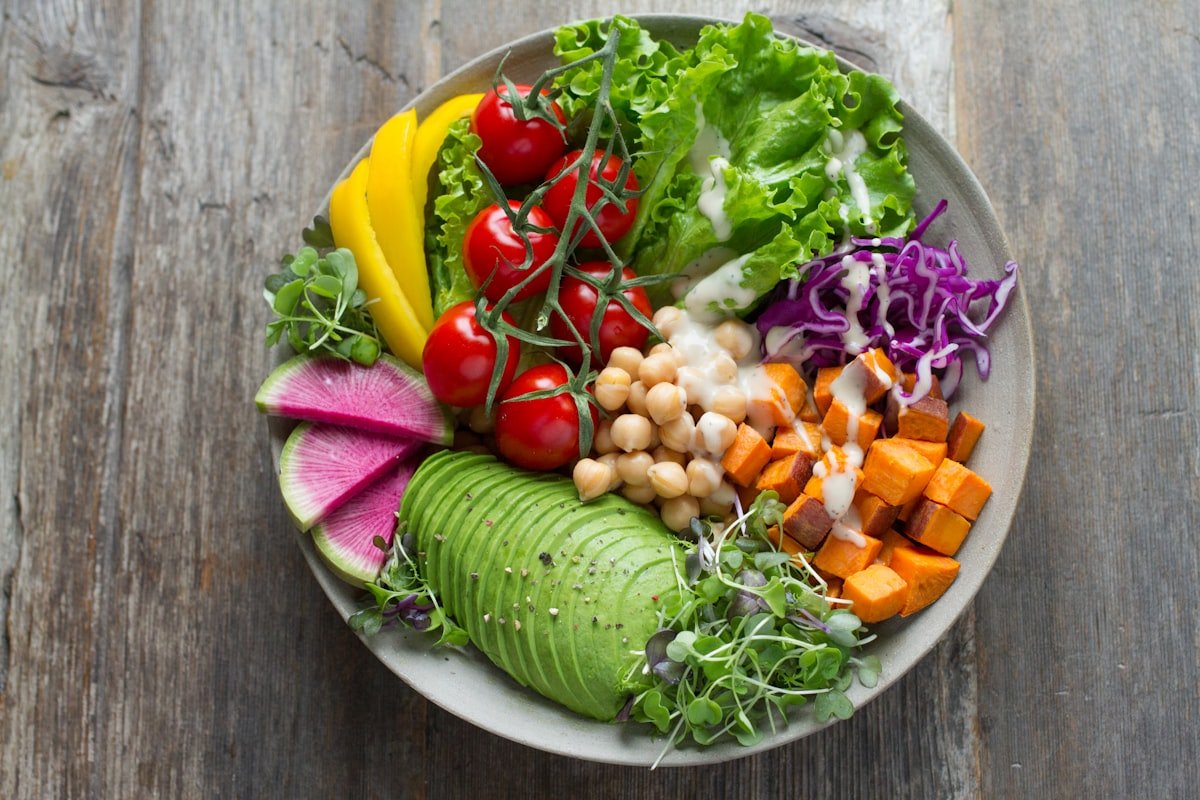
Put a vegetable somewhere it already fits. Grated carrot into whatever you eat. Spinach in the eggs. Leftover vegetables from last night, eaten cold, which is less strange than it sounds.
Favour the cruciferous ones a few times a week. Broccoli, cabbage, cauliflower — those are the glutathione ones. This is the closest thing to a genuine “detox food”, and it is unglamorous.
Eat the whole vegetable, not the juice. Juicing removes the fibre, and the fibre is doing much of the useful work. Without it, you are drinking concentrated sugar that goes straight to your liver.[3]
Drink water because your kidneys use it. Not to flush anything. Hydration supports filtration; it does not accelerate it.
The thing worth taking away
The detox industry sells you a problem you do not have, then sells you the solution. It works because “your blood is full of toxins” is frightening and “your liver is fine, actually” doesn’t sell anything.
What is true is quieter. You are already equipped. The vegetables are not rescuing you — they are supplying a system that has been running competently your whole life and will keep running whether or not you thank it.
Eat them anyway. Not because they are cleaning you out, but because a body with what it needs works better than one without. That is a smaller claim than the one you were sold, and unlike that one, it holds up.
References
- Bhatt A. What detox really means, and why most detox diets miss the point. The Conversation, 2026.
- Detox Myths vs. Science: Evidence-Based Approaches to Environmental Toxin Removal. On glucosinolates, glutathione production and fibre-bound waste elimination.
- MD Anderson Cancer Center. The facts behind 5 detox myths.
This article is for general information and is not medical advice. It is not a diet plan. If you have a liver or kidney condition, dietary changes should be discussed with your doctor rather than decided from an article.

Mindful Truth Hub publishes practical, research-informed guides on mental wellbeing, relationships, fitness, sleep and healthier everyday habits.