There is a version of stress that makes sense. Something is happening, you feel the pressure, it passes.
Then there is the other kind. Nothing is particularly wrong. Nothing is on fire. And you still wake up with your jaw tight and a low hum of dread that has no object attached to it. You cannot point at what is causing it, which makes it worse, because now you are also stressed about being stressed for no reason.
People tend to interpret this as a personal failing. That they should be able to manage. That other people cope with more and complain less.
Almost always, it is something physical.
What we think versus what is actually happening
What we tend to think: stress is caused by circumstances, so if my circumstances aren’t dramatic, my stress is irrational and I should be able to think my way out of it.
What the physiology suggests: stress is produced by a hormonal control system that can become dysregulated. Once it does, it generates the feeling of threat on its own — with no external cause required. You are not misreading your life. Your alarm system is miscalibrated.
The system responsible is the HPA axis, and understanding it changes how this whole thing looks.
The system that makes stress
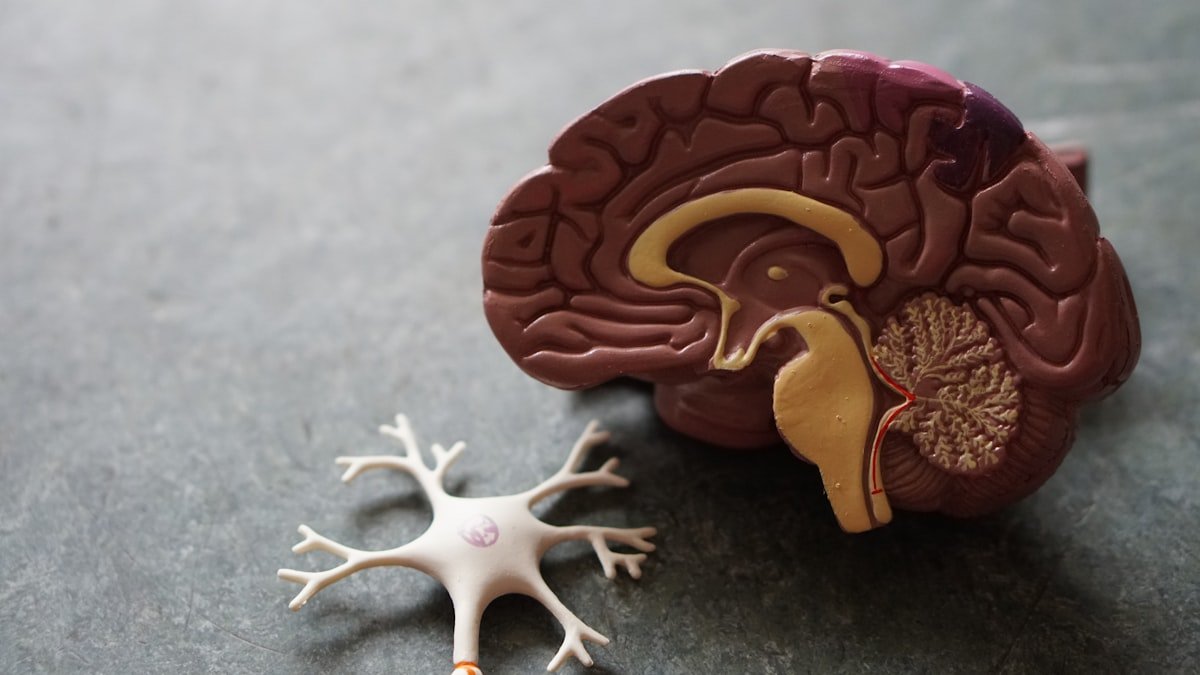
The hypothalamic–pituitary–adrenal axis is a communication system between three organs, and it is what manages your body’s response to stress. Each releases a hormone that triggers the next, ending in cortisol.[1]
Physical or psychological stress causes the hypothalamus to release CRH. That prompts the pituitary to release ACTH. That prompts the adrenal glands to release cortisol, which has receptors in nearly every cell type in the body and acts on metabolism, immunity and behaviour.[2]
The part that matters most is what happens next. Cortisol feeds back on the two hormones above it and switches the system off. That negative feedback loop is what allows the response to end once the threat has passed.[3]
When the loop stops closing properly, you get the thing you are experiencing.
How the loop breaks
Under sustained stress, prolonged cortisol exposure impairs the feedback mechanism and produces glucocorticoid receptor resistance — the receptors become less responsive to the signal telling them to stand down. The result is paradoxical cortisol dysregulation and a persistent pro-inflammatory state.[4]
Receptor resistance is the key idea. It is not simply that you have too much cortisol. It is that your cells have stopped listening to it properly, so the off switch no longer works reliably. Chronic stress produces consistently raised cortisol and, over time, that raises risk for immune dysfunction and autoimmune conditions.[1]
The medical causes people miss
Here is the part most articles about stress skip entirely: several things that dysregulate this system have nothing to do with your emotional life.
Sleep
Poor sleep quality, sleep deprivation and sleep disorders all lead to HPA axis dysregulation, producing elevated cortisol and altered stress responses.[5] Sleep deprivation is among the strongest dysregulators there is — even partial restriction reliably raises evening cortisol and blunts the morning awakening response within days.[6]
Within days. Not months. If you have been sleeping badly for a fortnight and feel inexplicably on edge, that is not coincidence — and it is not psychological. Our piece on sleep and mental health covers this in more detail.
Blood sugar
Cortisol plays a significant role in blood sugar regulation, which is why poorly managed blood sugar significantly affects the HPA axis.[5] Blood glucose instability triggers compensatory cortisol release.[5]
Practically: skipping meals, long gaps, heavy sugar crashes. Your body treats a glucose dip as an emergency and releases cortisol to correct it. Do that repeatedly and you have manufactured a stress response out of your eating schedule.
There is a specific pattern worth knowing. People with blood sugar dysregulation during sleep may wake feeling hungry, anxious, panicky or hot.[5] If you wake at 3am with your heart going and assume it is anxiety, it may be metabolic.
Thyroid
HPA dysfunction and thyroid dysfunction share symptoms — weight gain, fatigue, sleep problems — and the two can be genuinely difficult to tell apart without testing, which is why this needs a clinician rather than guesswork.[9] Thyroid function should be assessed when investigating chronic stress symptoms, since hypothyroidism produces overlapping presentations including fatigue, weight gain and cold intolerance.[9]
This is the single most common thing people miss. Undiagnosed thyroid dysfunction feels almost exactly like chronic stress, and no amount of meditation will touch it.
Sex hormones
Sex hormones modulate HPA axis responsiveness, and cortisol responses to the same stressor vary with sex, menstrual cycle phase and oral contraceptive use.[10] Which means the same stressor genuinely can produce a larger physiological response depending on where you are in a cycle. That is measurable, not imagined.
Other contributors
- Inflammation is both a stressor and a consequence of HPA dysfunction, since cortisol provides anti-inflammatory protection when at appropriate levels[5]
- Low magnesium is commonly said to heighten cortisol reactivity, though a systematic review of the available trials judged the evidence to be of consistently poor quality[7]
- Overtraining without recovery keeps the axis activated[5]
- Social isolation elevates cortisol and inflammatory markers[5] — covered in our article on why loneliness hurts
- Environmental toxins, including heavy metals and endocrine-disrupting chemicals, can impair the axis by interfering with hormone synthesis and receptor signalling[5]
- Genetics — variation in the glucocorticoid receptor gene NR3C1 affects how sensitive your cells are to cortisol, and variants in FKBP5 affect receptor sensitivity and are linked to PTSD and depression risk[8]
That last one is worth sitting with. Some people are genuinely built to feel stress more intensely than others, at the receptor level. If you have always been “the sensitive one”, there may be a gene behind it.
Why it becomes self-sustaining
Every one of these feeds the others.
Bad sleep raises cortisol. Raised cortisol worsens sleep. Elevated cortisol destabilises blood sugar. Unstable blood sugar triggers more cortisol. Inflammation impairs the axis, and the impaired axis produces more inflammation.
Which is why “just relax” fails so completely. You are not dealing with a mood. You are dealing with several interlocking physiological loops, and reasoning with them does not work.
What we think helps versus what actually moves the needle
What we reach for: stress management techniques. Meditation, breathing, a holiday. All genuinely useful — and all working on the psychological input to a system that may be broken further down.
What the evidence points at: fix the physical inputs first.
Sleep, before anything else. It is the strongest single dysregulator, and it responds within days. Consistent timing matters more than total hours.
Stop the glucose swings. Protein at breakfast, no six-hour gaps, less reliance on sugar for energy. Unglamorous, and it removes a genuine cortisol trigger you may be pulling several times a day.
Ask your doctor about blood tests. Thyroid function and metabolic markers are the usual starting point, but which tests are appropriate depends on your symptoms and history, and that is a judgement for a clinician rather than for an article. If something on that panel is off, you could meditate daily for a year and not touch it. This is the step people skip because it feels excessive — and it is the one most likely to find something.
Check your training load. If you exercise hard and never take rest days, you may be maintaining the exact state you are exercising to escape.
Then do the psychological work. Not instead of the above. After it. Recovery approaches include stress management and lifestyle modification alongside neuroendocrine-targeted treatment where appropriate.[4]
When to see a doctor
If this has gone on for months, if you are exhausted in a way sleep does not fix, if you have unexplained weight change, hair loss, temperature sensitivity, or your heart races at rest — see a GP and ask specifically about thyroid function and metabolic markers.
You are not being dramatic. You are asking someone to check the hardware before you spend another year assuming it is a software problem.
References
- Cleveland Clinic. HPA Axis: The Stress Response System.
- Karin O, et al. A new model for the HPA axis explains dysregulation of stress hormones on the timescale of weeks. bioRxiv.
- As above — cortisol negative feedback on CRH and ACTH secretion.
- Chronic Stress and Autoimmunity: The Role of HPA Axis and Cortisol Dysregulation. PMC12563903.
- An Integrative Approach to HPA Axis Dysfunction: From Recognition to Recovery. The American Journal of Medicine, 2025.
- Leproult R, Copinschi G, Buxton O, Van Cauter E. Sleep loss results in an elevation of cortisol levels the next evening. Sleep, 1997;20(10):865-870.
- Boyle NB, Lawton C, Dye L. The Effects of Magnesium Supplementation on Subjective Anxiety and Stress: A Systematic Review. Nutrients, 2017;9(5):429.
- Binder EB. The role of FKBP5, a co-chaperone of the glucocorticoid receptor, in the pathogenesis and therapy of affective and anxiety disorders. Psychoneuroendocrinology, 2009.
- Chaker L, Bianco AC, Jonklaas J, Peeters RP. Hypothyroidism. The Lancet, 2017;390(10101):1550-1562.
- Kudielka BM, Kirschbaum C. Sex differences in HPA axis responses to stress: a review. Biological Psychology, 2005;69(1):113-132.
This article is for general information and is not medical advice. Persistent stress symptoms should be assessed by a qualified doctor, who can rule out thyroid, metabolic and other medical causes. Do not self-diagnose a hormonal condition from an article.

Mindful Truth Hub publishes practical, research-informed guides on mental wellbeing, relationships, fitness, sleep and healthier everyday habits.