Health.
One word. Six letters. And yet it quietly decides how we experience almost everything else in life.
We talk about money constantly. How much are we earning? How much are we saving? When will we get the promotion? Can we afford a better house, a better car, a better future?
There is nothing wrong with any of those questions. Money matters. Financial security matters. Being able to provide for yourself and the people you love matters.
But there is one question many of us forget to ask:
Will my body still be able to enjoy the life I am working so hard to build?
That question lands differently.
Because many of us spend years trying to become financially secure while treating our health as though it can always wait. We sleep late because there is still work left. We wake early because the alarm does not care how tired we are. We sit for hours. We skip proper meals. We promise ourselves we will start exercising “next week.”
Stress becomes normal. Being tired becomes normal. Headaches become normal. Feeling mentally exhausted by Friday becomes normal.
And because we can still get out of bed, go to work and finish our responsibilities, we tell ourselves we are fine.
Sometimes we are.
Sometimes our body is simply being very patient with us.
We Take Better Care of Our Phones Than We Do of Ourselves
Think about it.
Your phone reaches 10% battery and immediately you start looking for a charger.
Your car makes an unusual sound and you want somebody to inspect it.
Your laptop starts overheating and you close some applications because you know something is being pushed too hard.
But our own body says, “I am exhausted,” and we answer, “One more hour.”
It says, “I have barely moved all day.” We answer, “I will exercise tomorrow.”
It says, “I have not slept properly for the last five nights.” We answer with another cup of coffee.
There is something slightly strange about that.
We understand perfectly well that machines need charging, cooling and maintenance. Yet we expect the human body to operate indefinitely on stress, short sleep, convenient food and determination.
The body is remarkably resilient. But resilience is not the same thing as being indestructible.
Your Body Is Repairing Things All the Time
The human body is doing an extraordinary amount of work while we are busy thinking about something else.
A small cut begins closing. Damaged cells are replaced. Muscles recover after physical effort. Your immune system constantly monitors potential threats. Your liver processes substances from the bloodstream. Your heart keeps beating while you are asleep.
This is one reason people sometimes say the body “heals itself.” There is truth in that idea, but it needs to be explained carefully.
Your body has powerful repair and recovery systems. It cannot repair everything on its own. Some injuries need medical care. Some diseases need treatment. Persistent symptoms should not simply be ignored while we wait for nature to fix them.
A better way to think about it is this:
Your body has an impressive ability to recover from ordinary strain, but it still needs the right conditions and enough time to do that work.
Sleep is one of those conditions. Nutrition is another. Movement matters. Recovery matters. And sometimes professional healthcare matters.
Sleep Is Not the Part of Life Where Nothing Happens
Sometimes sleep feels unproductive.
You are lying there. No emails are being answered. No money is being earned. Nobody is congratulating you for sleeping eight hours.
So when life becomes busy, sleep is often the first thing we sacrifice.
But biologically, sleep is not empty time. The U.S. National Heart, Lung, and Blood Institute explains that sleep supports healthy brain function and physical health, including processes involved in tissue repair, metabolism and cardiovascular health.
Read the NIH/NHLBI guidance on sleep and health.

Anyone who has gone through several nights of poor sleep already understands the difference without needing a scientific paper.
You wake up after a good night’s sleep and the day simply feels more manageable.
Then there are mornings when the alarm rings and you almost feel personally offended by it.
Your head feels heavy. Your eyes burn. Small problems feel more irritating than they should. You are technically awake, but part of your brain is still asking to go back to bed.
We sometimes call ourselves lazy on those mornings.
Sometimes we are simply tired.
If sleep has become the first thing you sacrifice whenever life becomes busy, read our guide Sleep and Mental Health: How Good Rest Supports Your Mind and Wellbeing.
Rest Is Not a Reward You Have to Earn
A lot of us have developed a strange relationship with rest.
We sit down for an hour and immediately feel guilty.
“I should be doing something.”
We take a day off and begin thinking about all the work waiting for us.
Even when our body is clearly exhausted, part of our mind treats resting as a weakness.
But recovery does not work that way.
If you train your muscles, they need time to recover. If you have been working intensely for days, your mind needs periods when it is not solving another problem. If you have slept badly all week, another late night probably is not the productivity hack you think it is.
Sometimes the responsible choice is to stop.
That does not mean quitting your goals. It means understanding that the person chasing those goals has biological limits.
There Is Nothing Wrong With Working Hard
Hard work is not the enemy.
Work gives people income. It can provide routine, confidence, purpose, social connection and a sense of achievement.
The World Health Organization recognizes that decent work can support mental health. But WHO also identifies excessive workloads, long or inflexible hours, low job control and job insecurity among workplace risks to mental health.
Read WHO’s Mental Health at Work fact sheet.
There is an important difference between:
“I am working hard because this period of my life requires it.”
and
“I have forgotten what it feels like not to be exhausted.”
Many people do not realise when they cross that line because it happens slowly. One late night becomes several. One stressful month becomes a stressful year. The temporary routine quietly becomes the permanent one.
Long Working Hours Are Not Just a Lifestyle Question
There is serious research behind the relationship between extreme working hours and health.
A joint WHO and International Labour Organization analysis estimated that long working hours contributed to hundreds of thousands of deaths from stroke and ischaemic heart disease in 2016. The analysis found that working 55 hours or more per week was associated with higher cardiovascular risk compared with working 35–40 hours per week.
Read the WHO/ILO report on long working hours.
That does not mean somebody working 55 hours will automatically develop heart disease. Health does not work through guarantees like that.
It does mean we should stop pretending that endless overwork is automatically harmless simply because it is common.
Sometimes ambition needs boundaries too.
Stress Lives in the Body as Well as the Mind
Stress is another word we use so often that it starts losing meaning.
“I am stressed.”
Everybody says it.
We almost treat stress as the background music of adult life.
But stress is not purely an idea inside your head.
WHO describes stress as a natural human response to difficult situations and notes that too much stress can affect both the mind and body. Symptoms can include difficulty relaxing or concentrating, headaches, body pain, stomach problems and trouble sleeping.
Read WHO’s guidance on stress.
You can sometimes feel stress before you consciously admit that you are stressed.
Your jaw stays tight.
Your shoulders are raised.
Your stomach feels unsettled.
You lie down exhausted, but your brain suddenly decides that midnight is the perfect time to think about every unfinished task in your life.
The mind and body are not separate companies operating from different buildings. They constantly affect one another.
If that feeling has become familiar, continue with The Science of Stress: How Chronic Stress Affects Your Brain and Body.
Sometimes the Best Thing You Can Do After Work Is Walk
Picture this.
You have been sitting in front of a screen for eight or nine hours.
You stand up.
Your back feels stiff.
Your legs somehow feel heavy despite barely being used.
Your head is full.
You could go directly from the office chair to the sofa.
And sometimes that is exactly what you need.
But other days, going outside for twenty or thirty minutes feels completely different.
The first few minutes still feel like work is following you. Then you start walking properly. You notice the air. People around you. The road. Trees. Your breathing.
Your body begins to feel warmer and less stiff.
Nothing dramatic has happened. Your problems have not disappeared.
But somehow you return home feeling a little more like yourself.
WHO reports that regular physical activity provides significant physical and mental-health benefits and is associated with lower risks of several chronic diseases.
Read the WHO Physical Activity fact sheet.
We recently explored this in much more detail in Benefits of Exercise for Your Body and Mind: How Daily Movement Supports Health, Reduces Stress and Builds Strength.
That article explains walking, body fat, strength training, stress relief, recovery and outdoor activity in greater depth.
Your Skeleton Has Been Carrying You Since Before You Could Walk
We rarely think about our skeleton.
We notice our bones when one breaks. We notice our back when it starts hurting. We notice our knees when they complain.
But underneath everything you see in the mirror is a structure that has been carrying you through your entire life.
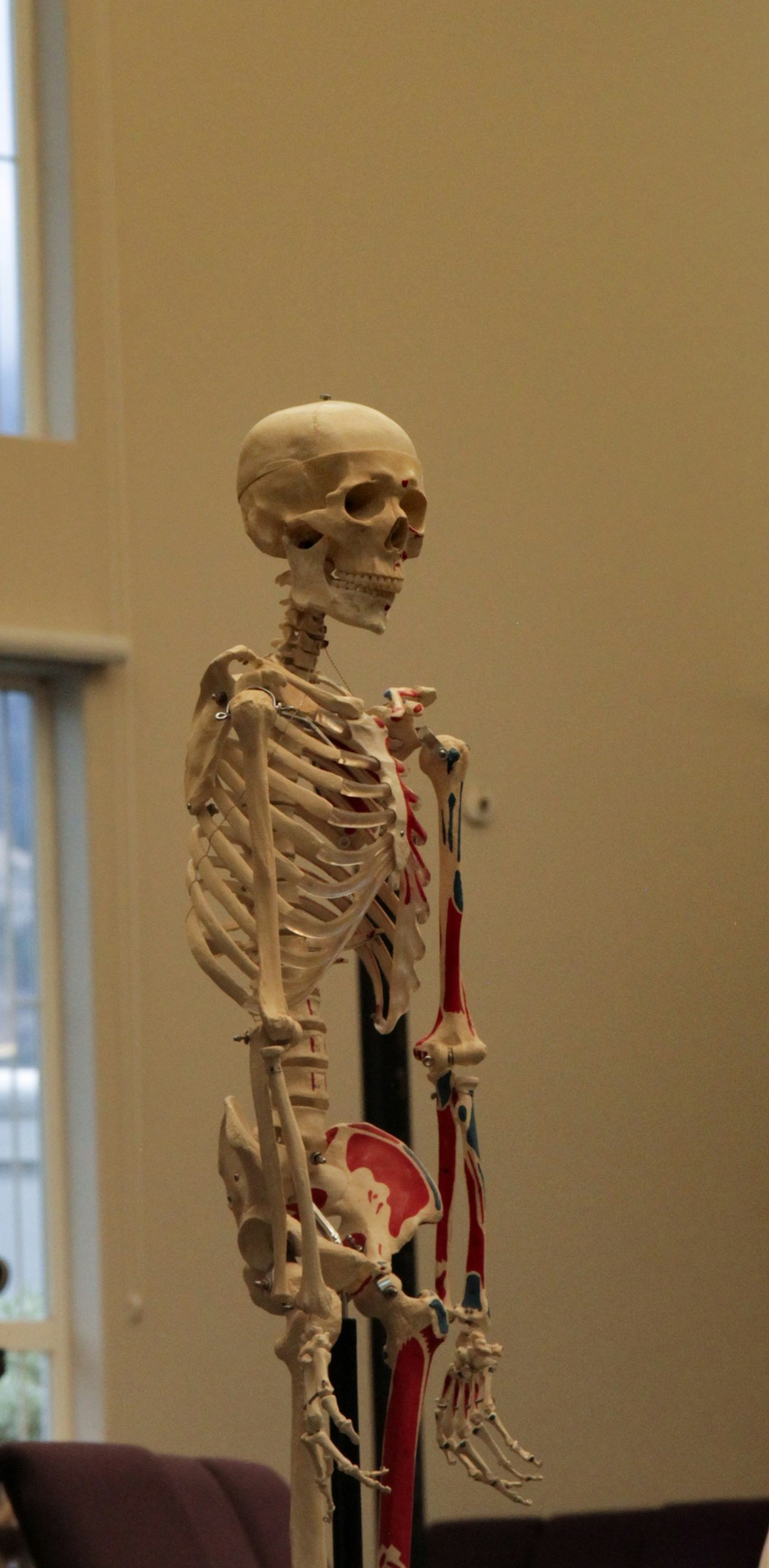
Bones. Joints. Muscles. Tendons. Ligaments. A nervous system coordinating the whole thing.
Your body allows you to get out of bed. Stand. Walk. Carry bags. Work. Hug somebody. Climb stairs. Dance. Travel. Pick up your child.
These things look ordinary only because we are used to being able to do them.
That is why health sometimes becomes most valuable to us only when something stops working the way it used to.
We often appreciate comfort once we lose it.
Health deserves attention before that happens.
Food Is More Than Something That Stops Hunger
When life becomes busy, food can become another task we try to complete as quickly as possible.
Grab something. Order something. Eat while working. Eat late. Move on.
Nobody needs to eat perfectly. That is an unrealistic standard.
But repeated eating patterns matter.
WHO describes healthy eating around broad principles such as adequacy, balance, moderation and diversity, and notes that healthy diets help protect against malnutrition and noncommunicable diseases.
Read WHO’s Healthy Diet fact sheet.
That is less exciting than most internet diets.
There is no secret ingredient. No single food that repairs everything. No magical breakfast.
Just a pattern.
Enough nutrients. Reasonable balance. Moderation. Different nutritious foods. And doing that more often than not.
If the relationship between food and recovery interests you, continue with Eat Well, Sleep Well: How Nutrition and Sleep Affect Each Other.
Health Is Usually Built Through Boring Things
This may be the least exciting health advice imaginable:
- Sleep properly.
- Walk.
- Eat reasonably well.
- Do some strength work.
- Avoid tobacco.
- Take breaks.
- Stay connected with people.
- Get persistent symptoms checked instead of ignoring them indefinitely.
These things are not dramatic enough for social media.
Nobody becomes famous by saying, “I went to bed at a sensible time for six months.”
But health is often built through things that look boring in the moment.
The important part is repetition.
One healthy meal does not transform your health. One bad meal does not destroy it. One terrible night’s sleep does not define your life. One perfect night’s sleep does not repair years of poor habits either.
It is what keeps happening that matters.
Our Daily Habits Accumulate Quietly
WHO reports that noncommunicable diseases such as cardiovascular disease, cancer, chronic respiratory disease and diabetes account for a very large share of deaths worldwide. Major modifiable risks include tobacco use, insufficient physical activity, unhealthy diets and harmful alcohol use.
Read the WHO Noncommunicable Diseases fact sheet.
This should not be turned into fear.
Nobody can completely control whether they become ill.
Genetics matter. Age matters. Environment matters. Access to healthcare matters. Some people live very healthy lives and still develop serious diseases.
The point is not that every illness is preventable.
The point is that there are some odds we can influence.
And those are worth influencing.
Your Body Does Not Always Send a Loud Warning
A health problem does not always arrive dramatically.
Sometimes it whispers.
You are more tired than usual. You become breathless more easily. Your sleep gets worse. You stop enjoying things you used to enjoy. Your back hurts every evening.
You keep saying, “It is probably nothing.”
Sometimes it is nothing serious.
But getting something checked is not weakness. Ignoring something does not make you tougher.
Taking health seriously includes knowing when self-care is no longer enough.
Walking is useful. Sleep is useful. Healthy food is useful. But there are moments when what you need is a healthcare professional.
Mental Health Counts Too
There is another mistake we make.
We talk about “health” and immediately think of the heart, lungs, weight or blood tests.
But your mind is part of your health.
A person can look completely healthy from the outside while struggling internally every day.
They go to work. They laugh with people. They answer messages. They do what is expected.
And nobody realises how difficult ordinary life has become for them.
Taking care of health also means recognising when anxiety, low mood, grief or emotional exhaustion is beginning to take over.
Not every difficult period requires therapy. But needing professional support is no more shameful than needing treatment for a physical problem.
If this is something you recognise in yourself, read How to Cope With Anxiety and Depression: Evidence-Based Strategies That May Help.
Health Is Not About Becoming Obsessed With Health
There is a trap on the other side too.
Taking care of yourself does not mean becoming terrified of every symptom.
It does not mean eating perfectly.
It does not mean feeling guilty because you skipped the gym.
It does not mean turning your life into one endless health project.
A healthy life still contains late nights, desserts, lazy weekends, busy periods, stressful weeks and days when you do absolutely nothing productive.
That is life.
The aim is not perfection.
The aim is to create a normal routine that your body can tolerate for years.
Sometimes Taking a Break Is the Healthy Choice
There are moments when what you need is not another productivity technique.
You need distance. A weekend away. An afternoon outside. An hour without notifications. A day when your laptop stays closed.
Rest does not always mean lying in bed. Sometimes changing your environment gives your mind room to settle.
Our article Why Taking a Break Can Help: The Psychology of Rest and Changing Your Environment looks more closely at why stepping away can sometimes help when life begins feeling mentally crowded.
Recovery is not only what happens after exercise.
People need psychological recovery too.
Stop Treating Exhaustion as a Personality Trait
There is almost a competition around tiredness now.
“I slept four hours.”
“I worked twelve hours.”
“I have not taken a holiday in two years.”
We sometimes tell these stories as though they prove how valuable or hardworking we are.
Being committed is admirable.
Being permanently exhausted is not a requirement for success.
If you are tired occasionally because life is demanding, that is normal.
If exhaustion has become your normal state, it deserves attention.
Your body is not impressed by how busy your calendar looks.
It still needs sleep. It still needs food. It still needs movement. It still needs recovery.
Money Matters — But Health Determines How You Experience It
There is an opposite mistake we should avoid as well.
Saying “money does not matter; only health matters” sounds nice when you already have enough money.
Financial problems themselves can create enormous stress.
Money provides safety, healthcare, housing, food, education, freedom and opportunity.
So health is wealth should never mean that financial security is irrelevant.
The better message is:
Do not destroy your health trying to build your wealth.
There is no victory in finally reaching financial security while being too exhausted or unwell to experience the life you created.
Career and health do not need to be enemies.
The goal is to build both.
Think About Your Future Body the Way You Think About Your Future Bank Account
We save money because we understand that the future exists.
You put something aside today so life might be easier later.
Health works in a similar way, although there are no guarantees.
A walk today is not just about calories burned today.
Strength training is not only about what you look like this month.
Sleep is not simply about tomorrow morning.
The habits you repeat become part of the environment your future body has to live in.
You are making small deposits: movement, sleep, nutrition, recovery, preventive care, stress management and relationships.
Not every deposit guarantees a healthy future.
But doing nothing does not improve the odds either.
What Taking Care of Yourself Can Actually Look Like
Taking care of your health does not have to begin on a Monday.
You do not need to redesign your entire life tonight.
It may simply mean going to bed an hour earlier because you know you are exhausted.
Walking for twenty minutes instead of scrolling for twenty minutes.
Taking a real lunch break instead of eating while replying to emails.
Adding some strength training during the week.
Calling a healthcare professional about something that has been bothering you.
Going outside when your head feels full.
Turning work notifications off for an evening.
Eating something nourishing because your body needs more than whatever is convenient.
And sometimes:
Doing absolutely nothing for a little while, without feeling guilty about it.
Listen Before Your Body Has to Shout
Your body communicates constantly.
Hunger. Thirst. Sleepiness. Pain. Tension. Fatigue. Breathlessness. Energy. Calm. Restlessness.
Not every signal means something is wrong.
But learning to notice these signals matters.
Sometimes we spend years trying to become disciplined enough to ignore our body when perhaps we should become disciplined enough to listen to it.
There are times when pushing yourself is necessary.
There are also times when stopping is wiser.
Knowing the difference is part of taking care of yourself.
Read the Research Yourself
You should never have to accept a health claim simply because a website says it confidently. These are the main public-health sources behind this article:
- World Health Organization — Physical Activity
- World Health Organization — Mental Health at Work
- WHO/ILO — Long Working Hours and Cardiovascular Health
- World Health Organization — Healthy Diet
- World Health Organization — Noncommunicable Diseases
- NIH/NHLBI — Sleep Deprivation and Deficiency
Continue Reading on Mindful Truth Hub
If work and daily pressure are leaving you constantly tense, continue with The Science of Stress: How Chronic Stress Affects Your Brain and Body.
If you regularly sacrifice sleep for work, read Sleep and Mental Health: How Good Rest Supports Your Mind and Wellbeing.
If you want to become more physically active, continue with Benefits of Exercise for Your Body and Mind: How Daily Movement Supports Health, Reduces Stress and Builds Strength.
If food and sleep are both parts of your routine you want to understand better, read Eat Well, Sleep Well: How Nutrition and Sleep Affect Each Other.
And if life simply feels too crowded at the moment, Why Taking a Break Can Help: The Psychology of Rest and Changing Your Environment may be a useful next read.
One Last Thought
Most of us spend years building a life.
We work. We save. We make plans. We worry about the future. We try to give our families something better.
All of that matters.
But underneath every plan is a body quietly carrying us through it.
A heart that has not taken a day off.
Lungs that keep breathing while we sleep.
Muscles and bones that get us where we need to go.
A brain that remembers who we love and why we are working so hard in the first place.
Perhaps health deserves more than whatever time is left after everything else.
You can lose money and earn some of it back.
You can replace a phone.
You can change jobs.
You can repair a car.
Your body is different.
It is the one place you have to live for your entire life.
So work hard. Build something. Earn well. Dream bigger.
But sleep too.
Move.
Eat properly more often than not.
Take the walk.
Take the day off when you genuinely need it.
Talk to somebody when your mind is struggling.
And when your body keeps telling you that something is wrong, listen.
Because health is not everything.
But without it, everything else can become much harder to enjoy.
Maybe that is what health is wealth was trying to tell us all along.
Medical note: This article is for general educational purposes only. It does not replace individual medical advice, diagnosis or treatment. Persistent symptoms, significant pain, unusual breathlessness, severe fatigue, ongoing sleep problems or other health concerns should be discussed with an appropriately qualified healthcare professional.

Mindful Truth Hub publishes practical, research-informed guides on mental wellbeing, relationships, fitness, sleep and healthier everyday habits.