Almost everyone with a phone in their pocket has a step target, and for most people that target is 10,000. It sits there on the screen like a medical recommendation — a line you either cross or fail to cross by bedtime.
It is worth knowing where that number came from, because it was not a laboratory.
The number started as an advertisement
The 10,000 figure traces back to Japan in the mid-1960s, around the time of the Tokyo Olympics, when a company began selling a pedometer called the manpo-kei — literally “10,000 step meter.” The name was memorable, the character for 10,000 looked a little like a walking figure, and the product sold.
That is the origin. Not a trial, not a consensus panel, not a dose-response curve. A product name that travelled further than anyone expected, until it ended up as the default setting on devices worn by millions of people who assume a scientist chose it.
None of which means 10,000 steps is bad for you. It means the number was never the finding. The actual research came later, and it tells a more forgiving story.
What the research found instead
In 2019, a study published in JAMA Internal Medicine followed a large group of older women, average age around 72, and measured their steps with devices rather than asking them to remember. Their average was roughly 5,500 steps a day — well short of the famous target.[1]
Compared with the least active quarter of the group, who averaged around 2,700 steps, women averaging about 4,400 steps had a markedly lower death rate over the follow-up period. The risk kept falling as steps rose — and then, at around 7,500 steps a day, it flattened out. Beyond that point, more steps were not associated with further reduction in mortality.[1]
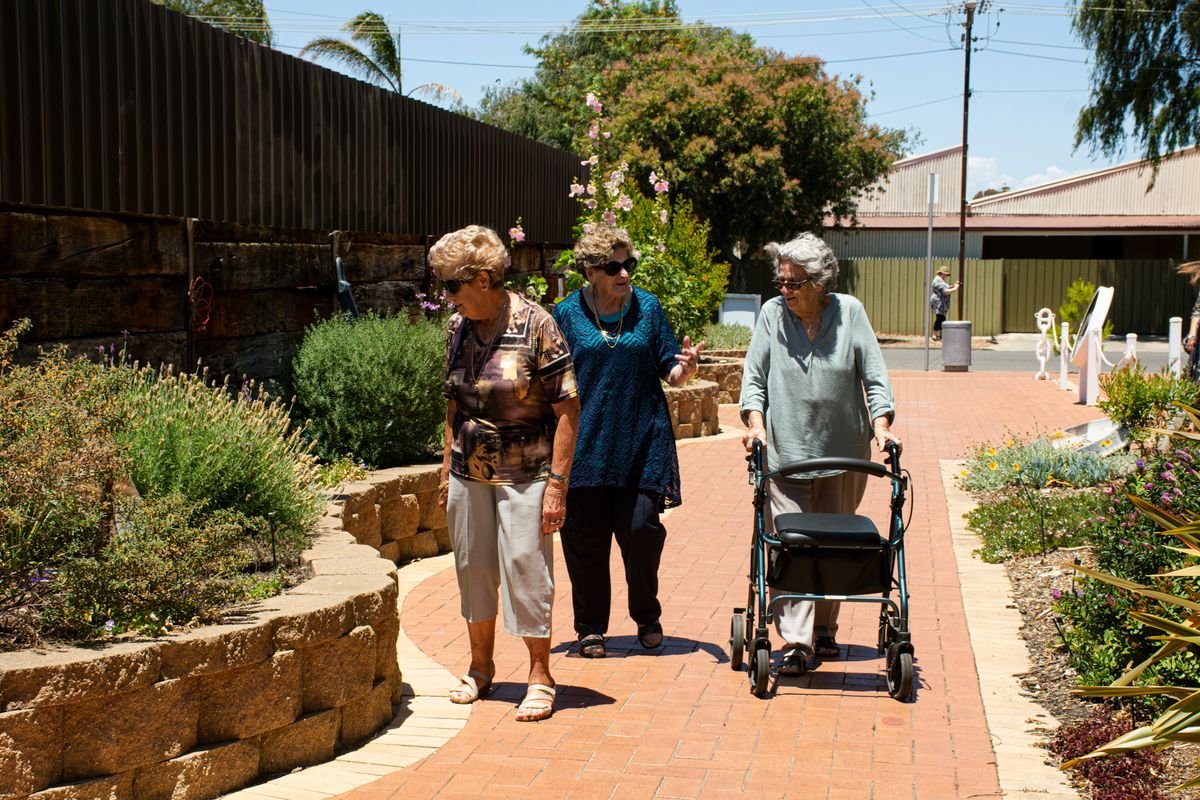
A much larger analysis published in The Lancet Public Health in 2022 pooled 15 studies across four continents, covering close to 50,000 people, and found something similar with an important refinement: the plateau depends on age. For adults aged 60 and over, the mortality benefit levelled off somewhere around 6,000 to 8,000 steps a day. For adults under 60, it levelled off closer to 8,000 to 10,000.[2]
Across that pooled data, people in the higher step groups had roughly 40 to 53 percent lower risk of death compared with the least active group, who averaged about 3,500 steps.[2]
So 10,000 is not wrong, exactly. For a younger adult it sits at the upper edge of where the benefit is still accumulating. For an older adult it is simply further than the evidence requires.
Does pace matter? Here the evidence genuinely splits
This is the part where honest reporting gets harder, because researchers do not currently agree.
The 2019 study found that once total step volume was accounted for, stepping intensity had no clear independent association with mortality. Most participants were walking more slowly than what is usually classed as moderate intensity, and they still showed the benefit.[1] The 2022 meta-analysis reached a similar conclusion: no definitive association with pace beyond the total number of steps.[2] For several years that was the prevailing summary, and it is still what most articles on this topic repeat.

More recent work complicates it. A 2025 analysis in the British Journal of Sports Medicine, drawing on device-measured data from more than 100,000 UK Biobank participants, reported that pace appears to carry its own independent signal. In that data, people taking fewer than 5,000 steps a day at a brisk cadence — somewhere above roughly 80 steps per minute — had mortality risk comparable to people walking 10,000 steps at a slower pace. The association with intensity looked steepest among the least active participants.[3]
These findings are not as contradictory as they first look. Different studies used different populations, different devices, different ways of defining intensity, and different follow-up periods — and how you measure cadence turns out to change the answer. But it would be dishonest to tell you the question is settled. It is not.
What survives either reading: total steps are reliably associated with lower risk, and picking up the pace may add something on top, particularly if you are starting from very little. What does not survive is the idea that a slow walk is wasted. In every one of these datasets, slower walkers accumulating steps did better than people accumulating none.
Why the gap between 2,700 and 4,400 is the interesting part
The headline usually lands on the plateau — 7,500, or 6,000, or whichever number a given article picks. But the steepest part of the curve is at the bottom.
Moving from around 2,700 steps to around 4,400 was associated with the single largest drop in risk in that 2019 data. That is a difference of roughly fifteen minutes of walking. The gain from 8,000 to 10,000 steps, by contrast, was not detectable at all.[1]
Which inverts the usual advice. The person who benefits most from walking more is not the reasonably active person grinding to hit a round number. It is the person currently doing very little, for whom a short daily walk represents a proportionally enormous change. Notably, that is also the group where the newer research suggests pace adds the most — so if you are starting from a low base, a slightly brisker fifteen minutes may be the highest-value change available to you.
If you are trying to build that habit from a standing start, our guide to the Benefits of Exercise for Your Body and Mind covers walking, strength work and recovery in more practical detail.
Walking is not only about how long you live
Mortality is the outcome these studies measure, because it is unambiguous and easy to count. It is not the outcome most people actually care about day to day.
The same movement that shows up in survival curves also shows up in research on mood, sleep and cognition. A review of more than 200 studies found several forms of exercise associated with meaningful reductions in depressive symptoms — we went through that evidence, and its limits, in Does Exercise Actually Help Depression? What 218 Studies Found. Cycling research points in a similar direction for the brain specifically, which we covered in What Cycling Does to Your Brain.
There is also a quieter benefit that no step counter records. A walk changes your environment, and changing your environment is one of the more reliable ways to interrupt a stuck mood — something we looked at in Why Taking a Break Can Help.
What is worth taking from this
- If you are barely moving, small increases matter more than almost anything else you could change about your step count.
- If you are over 60 and consistently getting 6,000 to 8,000 steps, the evidence does not suggest you are falling short of some necessary target.
- Pace may matter more than researchers thought a few years ago — but it is an addition to accumulating steps, not a precondition for them counting.
- These are observational studies. They show associations, not proof of cause, and people who walk more and faster tend to differ in other ways — including in baseline health, which can itself determine how fast someone walks. Researchers adjust for what they can, but that limitation is real.
- Mortality is only one outcome. Walking also appears in research on sleep, mood, blood pressure and joint health — none of which a step target captures.
The useful shift is away from treating 10,000 as a pass mark. A target you miss every day tends to become a reason to stop trying. A target you can actually reach tends to become a habit — and the habit, not the number, is what all of this research keeps pointing back to.
If you have a heart or lung condition, joint problems, or you have been inactive for a long stretch, it is worth speaking to a doctor about where to start rather than guessing — particularly before deliberately increasing your pace. That is not a formality. The right starting point genuinely differs from person to person.
Read the Research Yourself
You should never have to accept a health claim simply because a website says it confidently. These are the studies behind this article:
- Lee I-M et al. Association of Step Volume and Intensity With All-Cause Mortality in Older Women. JAMA Internal Medicine, 2019.
- Paluch AE et al. Daily steps and all-cause mortality: a meta-analysis of 15 international cohorts. The Lancet Public Health, 2022.
- Stamatakis E et al. Daily step count, stepping intensity and mortality — UK Biobank cohort. British Journal of Sports Medicine, 2025. Summarised by Medical News Today.
- National Institutes of Health. How many steps for better health?
Continue Reading on Mindful Truth Hub
If you want to become more physically active, start with Benefits of Exercise for Your Body and Mind: How Daily Movement Supports Health, Reduces Stress and Builds Strength.
If low mood is part of why movement feels difficult, read Does Exercise Actually Help Depression? What 218 Studies Found.
If you prefer two wheels to two feet, continue with What Cycling Does to Your Brain: The Research on Riding and Mental Health.
And if health keeps getting postponed until work calms down, read Health Is Wealth: Why Your Body Deserves the Same Attention as Your Career and Money.
Medical note: This article is for general educational purposes only. It does not replace individual medical advice, diagnosis or treatment. If you have a cardiovascular or respiratory condition, joint problems, or have been inactive for a long period, discuss changes to your activity level with an appropriately qualified healthcare professional before making them.
Photographs via Pexels.

Mindful Truth Hub publishes practical, research-informed guides on mental wellbeing, relationships, fitness, sleep and healthier everyday habits.