Most of us already know that exercise is supposed to be good for us. The harder part is fitting it into a normal life when work is busy, your mind is tired, and the sofa feels much more inviting than your shoes.
But exercise becomes easier to understand when you stop seeing it only as a way to lose weight. Movement affects how your heart works, how strong your muscles stay, how well you sleep, how your body handles stress, and even how capable you feel doing ordinary things.
Sometimes the benefit is not dramatic. You spend most of the day sitting, your shoulders feel tight, your back feels stiff, and your head is still carrying work long after the laptop is closed. Then you go for a twenty-minute walk. A few minutes in, your breathing finds a rhythm, your legs loosen up, and your mind is no longer staring at the same four walls. You come home thinking, I needed that.
That ordinary feeling of relief is one reason movement matters. Exercise is not magic, and it does not cure every health problem. But done regularly, it gives the body a repeated reason to adapt.
Exercise Is More Than Going to the Gym
You do not need an expensive membership or complicated equipment to be physically active. Walking counts. Cycling counts. Swimming counts. Dancing counts. Hiking counts. Playing a sport counts. Strength training counts. Even replacing some of the time you normally spend sitting with movement is a useful start.
The World Health Organization defines physical activity broadly as bodily movement produced by skeletal muscles that requires energy. So the better question is not simply, “Do I go to the gym?” It is, “How much does my body actually move during an ordinary week?”
Why You Can Feel Better After You Start Moving
Have you ever noticed how strange the body can feel after sitting for hours? Your lower back can feel stiff, your hips tight, and your legs heavy even though you have barely used them. Then you stand up, walk around, and after a few minutes movement starts to feel more natural again.
That does not mean every ache should be exercised away. Pain can have many causes. But it does show an important difference between rest and inactivity. Your body needs recovery, but it also needs regular movement.
During a brisk walk or other aerobic activity, your heart rate rises, your breathing increases, and working muscles use more energy. Repeated regularly, that challenge can improve physical capacity over time. The CDC’s current summary of physical-activity benefits for adults notes both immediate and longer-term benefits, including better sleep, lower feelings of anxiety, and reduced risks of several chronic diseases.
How Exercise Can Help With Stress
Stress does not live only in your thoughts. You can feel it in your jaw, shoulders, breathing, stomach, and the way you hold your body. After a difficult day, you may be physically tense without even realising it.
Exercise does not remove the problem that caused the stress. A deadline will still be there when you return from a walk. A difficult conversation still happened. But movement can give your body and attention somewhere else to go for a while.
You step outside. Your surroundings change. Your breathing changes. Your muscles begin working. Instead of replaying the same thought over and over, part of your attention shifts to movement, balance, pace and what is around you. That is one reason some people describe feeling lighter or calmer after exercising even though nothing in their life has technically changed.
If stress is something you deal with often, our article The Science of Stress: How Chronic Stress Affects Your Brain and Body looks more closely at what prolonged stress can do and why recovery is more complicated than simply telling yourself to relax.
Walking Is Simple, but That Is Exactly Why It Works for Many People
Walking is easy to underestimate because it does not look impressive. There are no heavy weights, no complicated machines and no dramatic before-and-after moment.
But walking has one major advantage: it can fit into real life. You can walk after dinner, during a work break, while taking a phone call, to a nearby shop, or simply because your head feels full and you need to get outside.

Walking outdoors can make regular movement easier to enjoy and repeat.
A sustainable routine is often more useful than an intense programme you hate. Someone who walks regularly for months may gain far more from that habit than someone who attempts an extreme workout plan and gives up after ten days.
Can Walking Help You Lose Body Fat?
Walking uses energy, so increasing how much you move can contribute to body-fat management when it sits inside an overall lifestyle that also includes appropriate nutrition and recovery.
But the internet often turns that into promises such as “walk for twenty minutes and melt belly fat.” That is not how the body works. You cannot choose exactly where fat disappears first, and body composition is influenced by total energy balance, genetics, hormones, age and other factors.
Researchers often study visceral fat, which is fat stored around internal organs. A 2024 systematic review and network meta-analysis of 84 randomized controlled trials in people with overweight or obesity found that several forms of exercise, including aerobic exercise, resistance training, combined training and high-intensity interval training, were beneficial for reducing visceral adipose tissue. That does not mean every person will respond in exactly the same way, but it supports the broader point that regular exercise can contribute to healthier body composition.
If you want to explore the relationship between weight and psychological health as well, see Obesity and Mental Health: What Research Says About the Connection.
Walking Uses Your Muscles, but Strength Training Has a Different Job
Walking certainly uses your legs, hips and core. For someone who has been inactive for a long time, becoming more active can make everyday movement feel easier and improve muscular endurance.
But if your goal is to build significant strength or muscle, walking should not be your only exercise. Muscles need a meaningful resistance challenge. That can come from bodyweight movements, resistance bands, dumbbells, gym machines or other forms of progressive strength training.
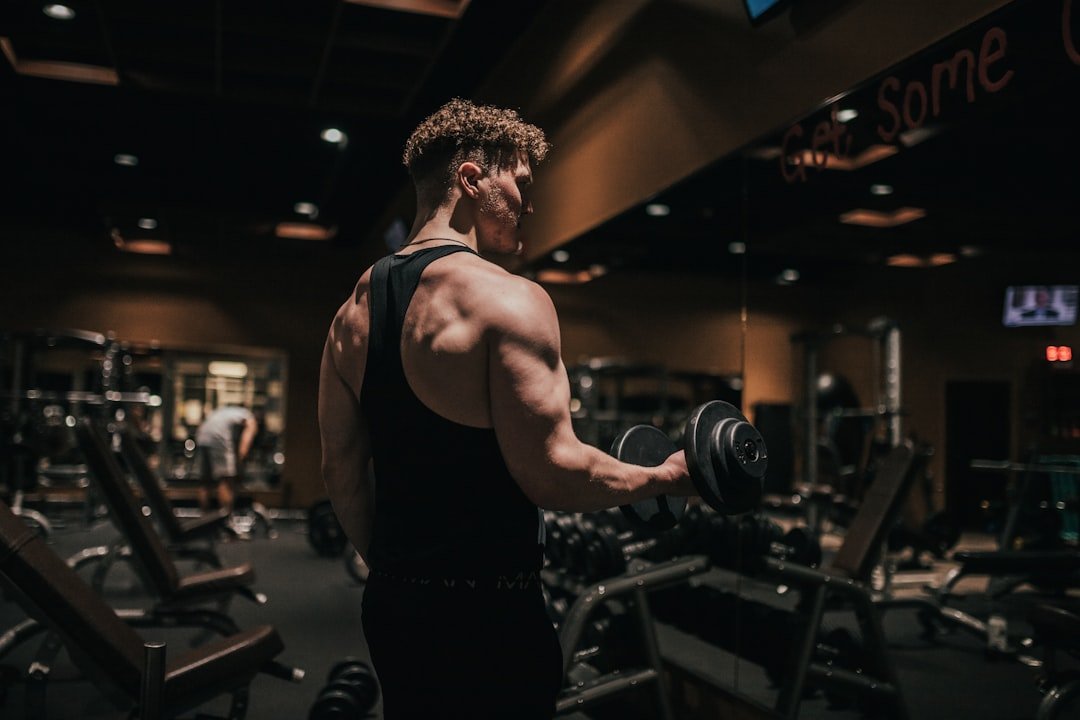
Strength training gives muscles a different stimulus from walking or other aerobic activity.
There is also a very human reason strength matters: muscle helps you live your life. You use it when you stand up from a chair, carry groceries, climb stairs, lift luggage, pick something up from the floor and catch yourself when you lose balance.
A useful fitness question is not only, “How do I want my body to look?” It is also, “What do I want my body to still be able to do ten or twenty years from now?”
That Ache After Exercise: When Soreness Is Normal and When It Is Not
Anyone who has returned to exercise after a long break probably knows the feeling. You work out on Monday, feel proud of yourself, and on Tuesday morning your legs suddenly have a strong opinion about sitting down.
Mild soreness after unfamiliar exercise can happen. Delayed-onset muscle soreness, often called DOMS, commonly becomes noticeable hours after a new or harder-than-usual session. That can be part of adapting to a training stimulus.
But soreness is not a score for how successful a workout was. More pain does not automatically mean more progress. Sharp pain, major swelling, loss of normal function, chest pain, fainting, or severe or persistent symptoms should not be celebrated as “the workout working.” Those are reasons to stop and seek appropriate medical advice when needed.
Rest Is Part of Training, Not the Opposite of It
Training provides a challenge. Recovery gives your body time to respond to that challenge.
That is why the basic rhythm of fitness is not “work harder every day.” It is more like: challenge, recover, adapt, and challenge again. Sleep, nutrition, hydration and rest all matter. Sometimes the healthiest decision is another workout. Sometimes it is going to bed.
Our article Sleep and Mental Health: How Good Rest Supports Your Mind and Wellbeing explains why sleep and recovery are so closely connected with mental and physical functioning.
Exercise Supports Heart and Metabolic Health
Your heart is working every second you are alive. When you walk briskly, cycle, swim or jog, your muscles demand more oxygen and your cardiovascular system responds by increasing blood flow.
Over time, regular physical activity is associated with lower risks of cardiovascular disease, stroke, type 2 diabetes and high blood pressure. The important word is risk. Exercise does not make someone immune to disease, and factors such as genetics, smoking, diet, blood pressure, cholesterol, age and medical history still matter.
Exercise also matters for metabolic health because working muscles require energy. This is another reason it is misleading to judge exercise only by whether the scale changes quickly. Fitness, blood-pressure response, strength, sleep and metabolic health can improve even when appearance changes slowly.
Exercise and Mental Health: Useful, but Not a Cure-All
Movement affects more than the body. A large 2024 systematic review and network meta-analysis published in The BMJ included 218 unique studies and 14,170 participants with depression. The researchers found reductions in depressive symptoms associated with several forms of exercise, including walking or jogging, yoga, strength training and mixed aerobic exercise.
That is meaningful evidence, but it should not be turned into a slogan such as “exercise cures depression.” The quality of evidence varied across comparisons, and treatment decisions should take account of the individual, their preferences, medical situation and professional care.
If you want the research in more detail, read Does Exercise Actually Help Depression? What 218 Studies Found. For broader self-care strategies, you can also read How to Cope With Anxiety and Depression: Evidence-Based Strategies That May Help.
Why Exercising Outdoors Can Feel Different
There is something different about walking under trees compared with staring at another screen. You notice light, air, sounds, weather, changing scenery and the simple fact that the environment is not asking you to answer another notification.
Research into nature exposure has examined possible effects on stress, mood and immune-related biological markers. A systematic review of 33 studies reported signals suggesting that nature exposure may influence several immune-related measures, including inflammatory pathways and natural killer cell activity.
But this is exactly where health writing needs restraint. The studies had limitations, and questions remain about effect size, how long changes last, and which environments matter. It would be too strong to say that a walk in a forest simply “boosts your immune system.” A more accurate conclusion is that nature exposure is an interesting area of research and may support wellbeing, while stronger claims still need better evidence.
There is also a practical benefit that does not require a laboratory test: if you enjoy walking outside more than you enjoy a treadmill, you may be more likely to keep walking. Enjoyment can help consistency.
If cycling is more your style, see What Cycling Does to Your Brain: The Research on Riding and Mental Health.
Sometimes Movement Gives Your Mind Somewhere Simpler to Go
Some benefits of exercise are difficult to capture in a single number.
Your mind has been busy all day: work, money, messages, relationships, tomorrow, yesterday, things you said and things you wish you had said. Then you start walking.
Left foot. Right foot. Breathe. Keep going.
You notice the road, the wind, a dog running past, someone watering a garden, the sound of your shoes on the ground. Your problems have not vanished, but for a little while you are not completely trapped inside them.
That feeling of mental space is one reason many people describe exercise as a form of release. It should not replace professional care when professional care is needed, but it can become one healthy part of a wider routine.
How Much Exercise Do Adults Need?
The WHO recommends that adults generally aim for 150–300 minutes of moderate-intensity aerobic activity per week, or 75–150 minutes of vigorous-intensity aerobic activity, or an equivalent combination. It also recommends muscle-strengthening activity involving the major muscle groups on at least two days per week.
If you are currently doing very little, those numbers can sound intimidating. You do not need to jump from zero to an athlete’s routine in one week. Start with ten minutes. Then fifteen. Then twenty. Build gradually. Some movement is better than none, and a routine that survives real life is more valuable than a perfect plan that lasts four days.
A Realistic Week Can Be Surprisingly Ordinary
A normal week does not have to look impressive. Monday might be a brisk walk. Tuesday could be a short strength session. Wednesday might simply involve getting up more often during the workday. Thursday could be another strength session. Friday might be a walk after work because your head feels crowded. Saturday could be cycling, hiking, swimming or playing a sport. Sunday might be recovery.
That is not a professional athlete’s schedule. It is just a life that contains movement.
Do Not Turn Exercise Into Punishment
Exercise is often presented as a debt. You ate too much, so now you have to run. You gained weight, so now you have to suffer. You dislike your stomach, so you need to train harder.
That relationship with movement is difficult to sustain.
You can exercise for a different reason. Walk because you like how your head feels afterwards. Lift because being stronger makes everyday life easier. Cycle because you enjoy where it takes you. Move because you want your body to remain capable as you get older.
Appearance can still be a goal. There is nothing wrong with that. It simply does not have to be the only reason you move.
The Feeling Afterwards Is Sometimes the Best Motivation
Some days you will not want to exercise. You finish work tired. The sofa looks much better than your shoes. You tell yourself you will go tomorrow.
Then you somehow convince yourself to walk for twenty minutes.
Forty minutes later you come back physically tired but strangely better. Your body feels used rather than stagnant. Your mind feels quieter. You drink some water, sit down, and resting actually feels like rest.
That feeling is difficult to explain until you experience it. It is not a cure or a transformation. It is simply the satisfaction of having moved a body that was built to move.
The Bottom Line
Your health probably will not change because of one incredible workout. It changes through ordinary days: a walk when you would normally stay on the sofa, taking the stairs sometimes, doing a strength session, going outside when your head feels crowded, and resting when your body genuinely needs recovery.
Over time, those ordinary decisions can become a lifestyle. Your body does not need you to punish it. It needs you to use it, challenge it appropriately, feed it, rest it and give it time to adapt.
The goal is not simply to look healthy. The goal is to build a body that feels capable of carrying you through your life.
Research and Trusted Sources
World Health Organization: Physical Activity Fact Sheet — health benefits, inactivity and physical-activity recommendations.
CDC: Health Benefits of Physical Activity for Adults — immediate and long-term benefits of regular physical activity.
The BMJ: Effect of Exercise for Depression: Systematic Review and Network Meta-analysis of Randomised Controlled Trials — 218 studies and 14,170 participants.
PubMed: Effects of Various Exercise Types on Visceral Adipose Tissue — systematic review and network meta-analysis of 84 randomized controlled trials.
PubMed: Nature Exposure and Its Effects on Immune System Functioning — systematic review of 33 studies, including discussion of evidence limitations.
Continue Reading on Mindful Truth Hub
For more on related topics, continue with The Science of Stress, Sleep and Mental Health, Does Exercise Actually Help Depression?, What Cycling Does to Your Brain, How to Cope With Anxiety and Depression, and Obesity and Mental Health.
Medical note: This article is for general educational purposes and is not individual medical advice. Exercise needs vary with age, health, medications, pregnancy, injuries and medical conditions. If you have concerning symptoms or are unsure whether an exercise programme is appropriate for you, seek advice from a qualified healthcare professional.

Mindful Truth Hub publishes practical, research-informed guides on mental wellbeing, relationships, fitness, sleep and healthier everyday habits.